Meandering Through Time
  • Home
  • My Family Stories
    • Bustaine of Braunton: Introduction
    • Hunt of Barnstaple Introduction >
      • Christopher Hunt >
        • Edward Hunt >
          • Richard Hunt >
            • Richard Hunt
            • Mary Hunt
    • Lakeman of Mevagissey >
      • Peter Lakeman c1698-1740
    • Meavy Introduction >
      • 6th to 9th Century Meavy >
        • Meavy Pre Conquest >
          • 1066 and Life in Domesday England >
            • Domesday and 13th Century Charters >
              • The Anarchy >
                • Walter, Wido and William Meavy >
                  • The Beginnings of a New Era
    • Mitchell of Crantock: An Introduction >
      • William Mitchell of Crantock >
        • Samuel Mitchell of Crantock >
          • Edith Mitchell >
            • Epilogue: Lescliston Farm
    • Mohun of Dunster: Introduction >
      • William Mohun c1050 - c1111 >
        • William Mohun c1100 - c1143 >
          • William Mohun - 1176 >
            • William - 1193 >
              • Reynold Mohun c1183 - 1213
              • Reynold Mohun c1210 -1257 >
                • Alice Mohun
    • Purches of Hampshire and Cornwall >
      • Samuel Purches 1733 - 1804 >
        • Samuel Purches 1766 - >
          • William Samuel Purches 1803 - 1861 >
            • Henry James Purches
    • Scoboryo of St Columb Major >
      • James and Joan Scoboryo 1640 - 1686
    • Thomas Vaughan: An Introduction >
      • Chapter One: Monmouthshire, Wales.
      • Chapter Two: The Beaufort Patronage
      • ​Chapter Three: Out With the Old
      • Chapter Four: Kentish Connections and Opportunities >
        • Chapter Five: Getting Personal
        • Chapter Six: ​The Children of Thomas Vaughan
        • Chapter Seven: Moving on
        • ​Chapter Eight: At Ludlow
        • Chapter Nine: The Arrest
        • Chapter Ten: Three Castles
        • Chapter Eleven: The Beginning of the End
        • Chapter Twelve: A Death Deserved ?
    • Smith of Barkby Introduction >
      • Susanna Smith
    • Taylor Introduction >
      • Joseph Taylor >
        • John Henry Taylor
    • Tosny of Normandy >
      • Godehute de Tosny
    • Toon of Leicestershire: Introduction >
      • John Toon 1799 -
      • Thomas Toon 1827 - 1874
    • Underwood of Coleorton Introduction
    • Umfreville of Devon >
      • The Northumbrian Umfrevilles >
        • The Glamorgan Umfrevilles
  • Other Families
  • History Blog
  • Wars of the Roses Blog
  • The Ancestors
  • Hendley of Coursehorne Kent
    • 5th to 12th Century Hendleys >
      • Gervais Hendley 1302 - c1344 >
        • Thomas Hendley >
          • Grevais Hendley c 1471 - 1534 >
            • Walter Hendley >
              • Elizabeth Hendley >
                • Ellen Hendley 1521- 1560 >
                  • Anne Hendley 1523 - >
                    • Other Hendleys
  • Pigott Family of Whaddon Buckinghamshire
  • Walter de Stapeldon :Endnotes
  • Tetbury Charters and Aconbury: Endnotes Abbey
  • Links
  • Contact

Execution of James Tyrell

6/5/2019

0 Comments

 
​On the 6th of May in 1502, Sir James Tyrell was executed for treason, his crime, contrary to what most people think and what the chronicles of history tell us, was not the murder of the Princes in the Tower but his support of the Yorkist cause.
His downfall you might say was in 1501, when he sheltered Edmund de la Pole, Earl of Suffolk and let him escape to France.
​
Tyrell never confessed to harming the Princes, his name wasn't mentioned in reference to their disappearance until ten years after his death. The most famous account, of course, was written by Thomas More in his History of Richard III, he states
"...very truth it is and well known that at such time as Sir James Tyrell was in the Tower, for treason committed against the most famous prince King Henry the Seventh, both Dighton and he were examined, and confessed the murder in manner above-written, but whither the bodies were removed they could nothing tell."
Picture
​James Tyrell was beheaded outside the Tower of London, the usual place for a traitor. His body was interred in the Church of the Austin Friars in London.
​
​The only images available to illustrate this post are of Tyrell doing away with the princes and that won't do! Instead, I've chosen to place an image of Thomas More writing his lies, and ensuring that Tyrell is seen as a villain for eternity.
0 Comments

Elizabeth of York

22/4/2019

0 Comments

 
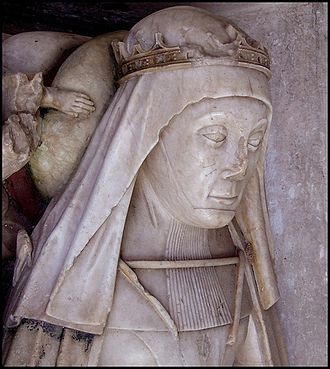
Elizabeth of York, later Duchess of Suffolk was born in Rouen in Normandy, the second daughter of Richard, Duke of York and Cecily Neville. She was the sister of both Richard III and Edward IV.

It is commonly thought that the date of her birth was the 22nd April in 1444 however, in the Annals of William Worcester the date of her baptism is quoted as being five months later on the 22nd September, and as it has quite rightly been pointed out it is unlikely that a child would be left unbaptised for such a long period. Therefore we can assume that Elisabeth was born on the 21st September in 1444 
in France at the time when Henry VI was playing yo-yo with her father's career - the time between Henry appointing the Duke of York as Lieutenant of France and the death of John, Beaufort the Duke of Somerset in the May of that year.

Elizabeth marriage to John de la Pole was thought to have been arranged by de la Poles mother Alice, it took place three years after the first Battle of St Albans at a time that is often considered the beginning of the Wars of the Roses.

At the time of John de la Pole becoming Duke of Suffolk his family was one of the least wealthy titled families in the country - although if his marriage to Margaret Beaufort (John Beauforts daughter) had not been annulled John's life may have been a different one altogether. The fifteen-hundred pounds that Elizabeth brought to the marriage was not a patch on what Margaret would have brought, made little difference to his finances.

Although this marriage allied de la Pole to the Yorkist party he is noted as having not shown any true support for either side. However, in 1461 he had made his decision, fighting for the Yorkist at the second Battle of St Albans and at Towton.
​
Elizabeth assumed the title of Duchess of Suffolk in the May of 1450 when John became Duke of Suffolk following the murder of his father William de la Pole. Elizabeth gave birth to eleven children, she would outlive eight of them. The three son who did survive their mother were Edmund, William and Richard all would suffer due to the Yorkist blood that ran through their veins.
Picture
Elizabeth of York, Duchess of Suffolk died in 1503/4 and is buried at Wingfield Church in Suffolk, alongside her husband.
0 Comments

Death of Henry VII

21/4/2019

0 Comments

 
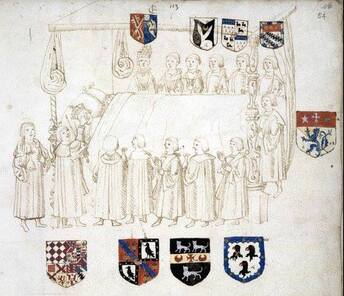
I remember reading many years ago that in the hours leading up to his death on the 21st April in 1509, King Henry VII was still concerned about the claim his family had to the crown of England. According to the future Henry VIII, he was instructed by his father on his death bed to fulfil the treaty between Spain and England and marry Catherine of Aragon, was this a sign Henry still considered the Tudor claim weak? According to the historian David Starkey, the claim that Henry was forced into the marriage was contradicted by two members of Henry VII’s council who insisted that the King told his son that he was “free to marry whom he chose”
Picture
King Henry VII died at Richmond Palace of tuberculosis. Sir Thomas Wriothesley was present and wrote a detailed account and it was he who drew the picture of the King on his deathbed. We can see William Fitzwilliam holding a staff of office as he closes the King’s eyes. Only Henry's must trusted courtiers attended his death. These men were, standing clockwise around the king were: Richard Fox, Bishop of Winchester, George, Lord Hastings, Richard Weston, Richard Clement, Matthew Baker, John Sharpe and William Tyler and Hugh Denys.

Henry death was kept secret for two days and only announced on the day before Henry VIII was proclaimed king. Surely another sign of how weak the Tudor claim was at the very beginning.
​
Like him or loathe him, Henry VII was a fascinating character, a forgotten king, eclipsed by later generations of his Tudor family.
0 Comments

Birth of John Clifford

8/4/2019

0 Comments

 
I was really surprised to discover that John Clifford, 9th Baron Clifford was just twenty-six when he was killed the day before the Battle of Towton, in my mind he was an older man.
Picture
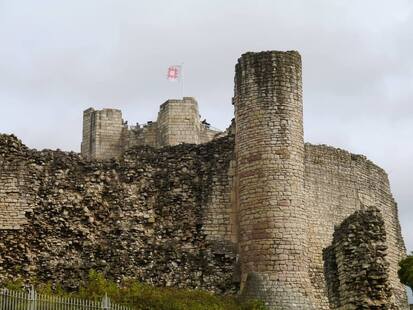
John Clifford was born on the 8th April in 1435 to Thomas Clifford and Joan Dacre at Conisbrough Castle in Yorkshire and we hear little of him until he was eighteen when he is recorded as siding with the Percy's against the Neville's in their ongoing private wars. He is mentioned again in 1458 as arriving in London in the Percy's retinue as one of the 'yong lordes whoos fadres were sleyne at Seynt Albonys.'  Full of energy and fuelled by vengeance Clifford took up the Lancastrian cause. ​
Picture
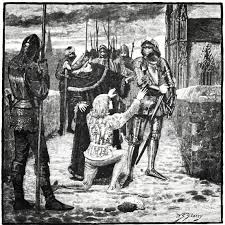
​On the 31st of December 1460, Clifford was knighted by the Duke of Somerset before the Battle of Wakefield. It was following this battle that he saw an opportunity to avenge his father's death by murdering the seventeen year old son of the Duke of York. For this, and his 'cruelty in battle.' John Clifford is immortalised, forever remembered as The Butcher, however, this name was only attributed to him in the 16th century in the writings of John Leyland and a century later by William Dugdale.
Picture
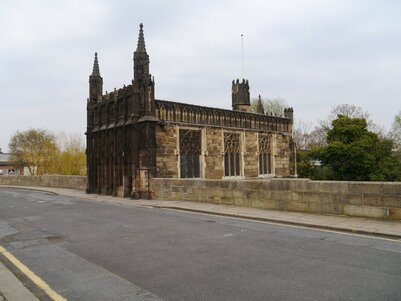
​Clifford's on death came when he was struck in the throat by a headless arrow at the Battle of Ferrybridge in the March of the following year and his body, it is said, was thrown into a common burial pit.
0 Comments

The Beaumont Brothers and the Battle of Towton

29/3/2019

0 Comments

 
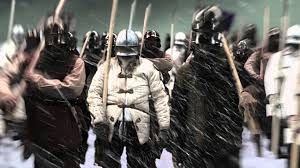
When it comes to the anniversary of the Battle of Towton, fought on the 29th March in 1461, I always think of all those men, many of whose names we will never know, who faced each other on that bitterly cold Palm Sunday. However, researching my family history I have discovered the names of two of the men who lost their lives that day. These men were brothers John and Henry Beaumont who were two of the three sons of Thomas Beaumont and his wife Philippa Maureward and they were not yet twenty-five and if that is not sad enough I believe that these brothers were probably twins.
Picture
Their father had been a veteran of the Hundred Years War and had fought under Edmund of Norwich, Duke of York in France, and on their father's death, the family lands had been divided John, Henry and their brother Thomas.

Despite living in a country where a man could be called up for battle at any time these young men must have dreamt of peace, a time to spend in their newly acquired piece of England, but many a dream was shattered in the era that we know as the Wars of the Roses - regardless of which side you fought on. The Beaumonts of Leicestershire were staunchly Lancastrian and at the Battle of Towton, Henry VI's forces would be brought to their knees by Edward IV's Yorkist army.
Picture
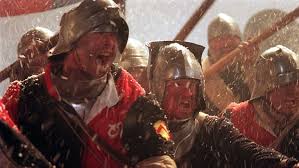
So the Beaumont brothers found themselves on a battlefield in Yorkshire with an icy wind circling around the feet and sleet blowing in their faces. As the battle commenced many soldiers may have thought, judging by the number of men on the field, that Towton would be a decisive battle, but the wind blew harder and the snow increased and hand to hand combat turned into bloody slaughter - decisive it was indeed. By the end of that cold and wretched day, over twenty thousand men lost their lives.

I don't know yet of the fate of John and Henry Beaumont's bodies, maybe their battered faces were recognised among the dead and they were taken home but I doubt it. What is more likely is that they were both thrown into one of the many mass graves dug on the battlefield, to spend eternity with the thousands of other nameless poor souls.

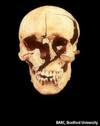
​My post makes grim reading, doesn't it? But what makes even grimmer reading is the shocking evidence of how exactly many of the soldiers at Towton died. One man on the battlefield that day is now known as Towton 25 he was called this because we don't know his name, but what we do know is that what remains of him is gruesome evidence of what he had to endure.

Picture
​Towton 25's story can be found on my blog on my website - you can read it here.

                     meanderingthroughtime.weebly.com/wars-of-the-roses-blog/battle-of-towton-29th-march-14611
0 Comments

Edward IV arrives in England

14/3/2019

0 Comments

 
"It is a difficult matter to go out by the door and then try to enter by the windows. They think he will leave his skin there."
writes the Duke of Milan's ambassador to France on Edward IV's prospects of retaking England.
Picture
It was in the second week of March 1471 Richard Neville had received news that ships flying the Yorkist banner had been spotted off the coast of Norfolk, and on this day the 14th of March, Edward, William Hastings and Richard, Duke of Gloucester had arrived at Ravenspur on the east coast of England, the very port Henry IV had landed seventy years before to claim the English throne
0 Comments

Rene of Anjou

16/1/2019

0 Comments

 
On this day in 1409 the birth of Rene of Anjou at Angers Castle in Anjou. Rene was a French noble of the family of Valois and Anjou. Known as Good King Rene simply because he inherited the crowns of Naples, Sicily and Jerusalem, he controlled large areas of land, he was therefore, an important figure during the last years of Hundred Years War.

Rene was the father of Margaret of Anjou Queen of Henry VI. Rene played his part in the negotiations with the English at Tours in 1444 and the marriage of Margaret to Henry - the fall out of which (the loss of French territories of Maine and Anjou, that had formed part of the marriage contract) as you will know, was far-reaching.

A wonderful description of Rene is given by Conn Iggulden in his book Stormbird, the first of his Wars of the Roses series (read it if you haven't already, its a must) The description comes from the mouth of the teenage Margaret.

"He was just a great white slug of a man. His face was unnaturally pale, perhaps from his years languishing in prison. His eyes were grey and cold, half hidden by heavy, unwrinkied lower lids, so that he always seemed to be peering over them. He had clearly not starved in prison."
Picture
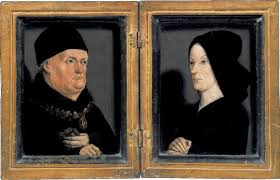
I would not be surprised if Conn Iggulden took his inspiration from the Matheron Diptych that it is pictured here. The painting, by French artist Nicolas Froment was given to Jean Matheron, statesman and later a French ambassador, by Rene himself. He is depicted with his second wife Jeanne de Laval it is held in the Louvre in Paris.
0 Comments

A Blot on the Landscape

26/9/2018

0 Comments

 
​Sadly, last evening Hinckley and Bosworth Borough Council passed the application for planning permission to build a test track on Bosworth Field. I'm disappointed and angry. Those opposed were allowed one representative and three minutes to state their case. So much for democracy!
I'm saddened by this not only by the lack of regard for our countries heritage/history but the dangers, if it ever comes to fruition, of driverless cars on our roads.

                                       https://www.economist.com/…/why-ubers-self-driving-car-kill…

This build is a blot on the landscape for more than one reason.
​
The next step, according to Matthew Lewis, author of the latest book on Richard III, would be to take it to a national level and ask the government to review the decision, a process he said that ​"allows the minister to take the decision out of the hands of the local council"
0 Comments

Berwick on Tweed

24/8/2018

0 Comments

 
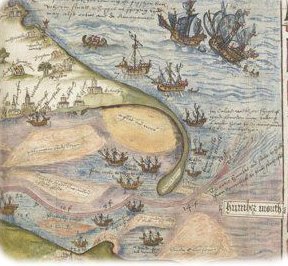
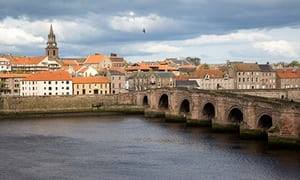
The town of Berwick stands on the banks of the River Tweed in Northumberland. Historically, its position proved useful as it is situated on the border between England and Scotland, and because of this, it has seen its share of both war and peace. Because of its situation, its governance has been the responsibility of both countries on numerous occasions.
Picture
In 1357 a treaty was signed here, the first of five Treaties of Berwick, this particular treaty, between King Edward III of England and David II of Scotland, brought to an end Scotland's second attempt at independence.

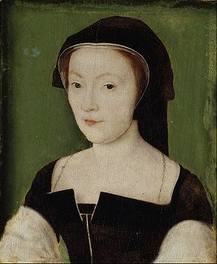
In 1461 during the Wars of the Roses, when Henry VI's wife Margaret of Anjou had fled to Scotland she negotiated a deal with the recently widowed Mary of Guelders over the town in return for help with her Lancastrian cause. When all the papers are signed Berwick upon Tweed became part of Scotland, and it was not until the August of 1482 that Richard, Duke of Gloucester, later King Richard III retook the town and returned it to England.
A second treaty, signed in 1526, was issued in order to keep the peace between warring factions on the English/Scottish border.

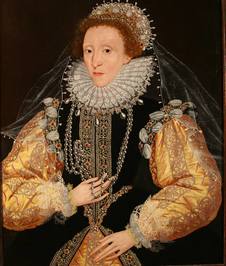
​A third, signed on this day in 1560 saw the completion of yet another Treaty of Berwick. This treaty was Elizabeth I's efforts to give some protection to those who practiced Protestantism in Scotland. The document was signed for and on behalf of the queen by Thomas Howard the Duke of Norfolk. The agreement was in respect of an alliance with Scottish nobles who were opposed to the regency of Mary of Guise, the widow of James V of Scotland, who had retained a French army for her protection. The treaty allowed English forces to enter Scotland and expel these French troops and it would be the first time in history that the English and Scottish fought together against a common foe rather than against each another.

There would be two more signing of treaties at Berwick, one in 1586 following an agreement between Elizabeth I and Mary of Guise's grandson King James VI and another in 1639 that ended the First Bishops War.
Picture
Picture
Picture
0 Comments

Execution of Richard Woodville

12/8/2018

0 Comments

 
​To the surprise of many, and disregarding the acknowledged rules of diplomacy King Edward IV had, in the May of 1464, made his own choice of a bride. The king's new wife was one Elizabeth Grey, the daughter of Richard Woodville and Jacquetta of Luxembourg, a family of lowly stock from the County of Northampton.
​
There was, of course, a little more to the Woodvilles than the fact they were 'social climbers.' Richard Woodville had been in command of an army during the French wars. He had met Jacquetta, the young widow of the Duke of Bedford when he had accompanied her on the voyage home to England from Rouen. In 1433 Woodville married Jacquetta in secret. Their eldest child, the aforementioned Elizabeth, was born four years later.
Picture
Garter Stall Plate of Richard Woodville at St George’s Chapel, Windsor
Jacquetta was a member of Margaret of Anjou's court and Richard Woodville, as a loyal servant to Henry VI was eventually rewarded with a barony in 1448.

Edward, as we all know, fell instantly in lust when he came across Elizabeth. Richard Woodville's daughter was a strong-willed widow with two young sons and eight siblings to boot and Edward, as previously mentioned would undertake this marriage without the knowledge of one man who was so instrumental in bringing him to the throne - Richard Neville, Earl of Warwick. This event was a turning point for Richard Neville and the first the nail in the coffin of Richard Woodville.

Richard Neville was angered by the fact that the Woodville men were placed in important administrative roles. Other events such as the king’s refusal to sanction the marriage of his daughter to George, Duke of Clarence and the influence of the Herbert family the Earls of Pembroke in the royal court just rubbed salt into his wounds. Richard Neville was about to jump from the Yorkist ship into Lancastrian waters.

Warwick’s rebellion would see off William Herbert and his brother Richard at Northampton on the 26th July in 1469 and on this day, just seventeen days later Richard Woodville and his son John would be beheaded as traitors.

To Richard Neville, revenge may have been sweet - but in the words of Martin Luther King Jr
​
                                                   "The old law of 'an eye for an eye' leaves everybody blind."
0 Comments
<<Previous
Forward>>

    RSS Feed

    Categories

    All
    1420
    1450
    1461
    1471
    14th Century
    15th Century
    16th Century
    19th Century
    Acts Statutes And Treaties
    Adam Moleyns
    Alice De La Pole
    Alice Montacute
    Andrew Trollope
    Anjou
    Anne Beauchamp
    Anne Mortimer
    Anne Neville
    Anthony Woodville
    April
    Aristrocracy And Nobility
    Art
    Audley Family
    August
    Baron Sutton
    Battle Of Barnet
    Battle Of Blore Heath
    Battle Of Bosworth
    Battle Of Bramham Moor
    Battle Of Edgecote
    Battle Of Edington
    Battle Of Ferrybridge
    Battle Of Hedgeley Moor
    Battle Of Losecoat Field
    Battle Of Ludford Bridge
    Battle Of Mortimer's Cross
    Battle Of Shewsbury
    Battle Of St Albans 1455
    Battle Of St Albans 1461
    Battle Of Stoke
    Battle Of Tewkesbury
    Battle Of Towton
    Battle Of Wakefield
    Beaumont Family
    Berwick On Tweed
    Boston
    Bosworth Field
    Bredwardine Family
    Burgundian Wars
    Cadaver Tomb
    Calais
    Castles
    Cathedrals And Churches
    Catherine Of Valois
    Cecily Neville
    Charles The Bold
    Christmas
    Crowland Abbey
    Crowland Cronicles
    December
    De La Pole Family
    Despencer Family
    De Vere Family
    Dublin
    Duchess Of Burgundy
    Duchess Of Suffolk
    Duke Of York
    Earl Of Devon
    Earl Of Salisbury
    Edmund Beaufort Duke Of Somerset
    Edmund Earl Of Rutland
    Edmund Tudor
    Edward Earl Of Warwick
    Edward III
    Edward IV
    Edward Of Lancaster
    Edward Of Middleham
    Edward The Black Prince
    Edward V
    Elizabeth
    Elizabeth I
    Elizabeth Of York
    Elizabeth Woodville
    Execution Of Nobles
    February
    Food
    France
    Francis Lovell
    Gainsborough Hall
    Geoffrey Chaucer
    George Duke Of Clarence
    God
    Hampshire
    Henry Earl Of Lancester
    Henry Percy
    Henry Tudor
    Henry V
    Henry VI
    Henry VII
    Henry VIII
    Hereford
    Humphrey Duke Of Gloucester
    Humphrey Stafford
    Isabella Of Burgundy
    Isabel Neville
    Isabel Of Bourbon
    Jack Cade
    James I Of England
    James Tuchet
    January
    Jasper Tudor
    John Beaufort
    John Clifford
    John De La Pole
    John De Vere
    John Duke Of Bedford
    John Fiennes
    John Grey Of Groby
    John Leland
    John Morton
    John Of Gaunt
    John Sutton
    John Tuchet
    July
    June
    Katherine (daug Of Richard III)
    Lambart Simnel
    Lancaster
    Leicester
    Lincolnshire
    Lionel Of Antwerp
    Literature
    Lord Audley
    Louis XI
    Ludlow
    March
    Margaret Beauchamp
    Margaret Beaufort
    Margaret Of Anjou
    Margaret Of York
    Mary Of Guelders
    Mary Of Guise
    May
    Medicine
    Medieval Castles
    Medieval Music
    Medieval Warfare
    Micklegate Bar
    Mohun Family
    Mortimer Cross
    Neville Family
    Normandy
    Northamptonshire
    Nostell Priory
    Nottinghamshire
    November
    October
    On This Day
    Owen Glyndwr
    Owen Tudor
    Parhelion
    Parliament
    Percy Family
    Philippe De Commynes
    Phillippe Pot
    Plantagenet
    Pontifract
    Prince Of Wales
    Princes
    Princes In The Tower
    Princesses
    Propaganda
    Ralph And Edward Shaa
    Ravenspur
    Readeption Of Henry VI
    Rebellion
    Re Enactments
    Revenge
    Rhys Ap Thomas
    Richard Duke Of York
    Richard Herbert
    Richard II
    Richard III
    Richard Neville
    Richard Neville (The King Maker)
    Richard Of Conisbrough
    Richard Of Eastwell
    Richard Of Shrewsbury
    Road To Bosworth: Henry Of Richmond
    Robin Of Redesdale
    Roger Vaughan
    Rowland Lockey
    Rutland
    Sandal Castle
    Sand Sculptures
    Saxton
    Scarborough
    Second Battle Of St Albans
    September
    Shakespeare
    Skirbeck
    Statutes And Treaties
    St Paul's Cross London
    Sufflok
    Tattershall
    Tattershall Collage
    Tewkesbury Abbey
    The Arrivall
    The Beaufort Family
    The Black Death
    The Black Prince
    The Blue Boar Inn
    The Browne Family
    The De La Pole Family
    The Hollow Crown
    The King Maker
    The Legendary Ten Seconds
    The-road-to-bosworth-richard-iii
    The-road-to-bosworth-richard-iii
    The Tudors
    The Wakefield Tower
    The Woodville Family
    Thomas Browne
    Thomas Burgh
    Thomas Clifford
    Thomas Earl Of Lancaster
    Thomas More
    Thomas Percy
    Thomas Stanley
    Thomas Vaughan
    Tilney Family
    Tower Of London
    Towton 25
    Transie Tomb
    Treaties
    Tudor
    Tudors
    Tyrell Family
    Vengeance
    Vulgate
    Wales
    Walter Devereux
    Wars Of The Roses
    Wars Of The Roses In Art
    Weapons
    Welles Family
    Westminster Abbey
    William Aschough
    William Cromer
    William De La Pole
    William Hastings
    William Herbert
    William Hobbes
    William Of Hatfield
    William Of Worcester
    William Oldhall
    William Shakespeare
    Women
    Woodville Family
    York
    Yorkshire

    Archives

    May 2024
    December 2022
    September 2022
    June 2022
    November 2021
    January 2021
    September 2020
    July 2020
    December 2019
    November 2019
    September 2019
    August 2019
    July 2019
    June 2019
    May 2019
    April 2019
    March 2019
    January 2019
    September 2018
    August 2018
    July 2018
    May 2018
    April 2018
    March 2018
    February 2018
    January 2018
    December 2017
    November 2017
    October 2017
    September 2017
    August 2017
    June 2017
    May 2017
    April 2017
    March 2017
    February 2017
    January 2017
    November 2016
    October 2016
    September 2016
    August 2016
    July 2016
    June 2016
    May 2016
    April 2016
    March 2016
    February 2016
    January 2016
    October 2015
    September 2015
    August 2015
    July 2015
    June 2015
    December 2014
    February 2014
    December 2013

Powered by Create your own unique website with customizable templates.