Meandering Through Time
  • Home
  • My Family Stories
    • Bustaine of Braunton: Introduction
    • Hunt of Barnstaple Introduction >
      • Christopher Hunt >
        • Edward Hunt >
          • Richard Hunt >
            • Richard Hunt
            • Mary Hunt
    • Lakeman of Mevagissey >
      • Peter Lakeman c1698-1740
    • Meavy Introduction >
      • 6th to 9th Century Meavy >
        • Meavy Pre Conquest >
          • 1066 and Life in Domesday England >
            • Domesday and 13th Century Charters >
              • The Anarchy >
                • Walter, Wido and William Meavy >
                  • The Beginnings of a New Era
    • Mitchell of Crantock: An Introduction >
      • William Mitchell of Crantock >
        • Samuel Mitchell of Crantock >
          • Edith Mitchell >
            • Epilogue: Lescliston Farm
    • Mohun of Dunster: Introduction >
      • William Mohun c1050 - c1111 >
        • William Mohun c1100 - c1143 >
          • William Mohun - 1176 >
            • William - 1193 >
              • Reynold Mohun c1183 - 1213
              • Reynold Mohun c1210 -1257 >
                • Alice Mohun
    • Purches of Hampshire and Cornwall >
      • Samuel Purches 1733 - 1804 >
        • Samuel Purches 1766 - >
          • William Samuel Purches 1803 - 1861 >
            • Henry James Purches
    • Scoboryo of St Columb Major >
      • James and Joan Scoboryo 1640 - 1686
    • Thomas Vaughan: An Introduction >
      • Chapter One: Monmouthshire, Wales.
      • Chapter Two: The Beaufort Patronage
      • ​Chapter Three: Out With the Old
      • Chapter Four: Kentish Connections and Opportunities >
        • Chapter Five: Getting Personal
        • Chapter Six: ​The Children of Thomas Vaughan
        • Chapter Seven: Moving on
        • ​Chapter Eight: At Ludlow
        • Chapter Nine: The Arrest
        • Chapter Ten: Three Castles
        • Chapter Eleven: The Beginning of the End
        • Chapter Twelve: A Death Deserved ?
    • Smith of Barkby Introduction >
      • Susanna Smith
    • Taylor Introduction >
      • Joseph Taylor >
        • John Henry Taylor
    • Tosny of Normandy >
      • Godehute de Tosny
    • Toon of Leicestershire: Introduction >
      • John Toon 1799 -
      • Thomas Toon 1827 - 1874
    • Underwood of Coleorton Introduction
    • Umfreville of Devon >
      • The Northumbrian Umfrevilles >
        • The Glamorgan Umfrevilles
  • Other Families
  • History Blog
  • Wars of the Roses Blog
  • The Ancestors
  • Hendley of Coursehorne Kent
    • 5th to 12th Century Hendleys >
      • Gervais Hendley 1302 - c1344 >
        • Thomas Hendley >
          • Grevais Hendley c 1471 - 1534 >
            • Walter Hendley >
              • Elizabeth Hendley >
                • Ellen Hendley 1521- 1560 >
                  • Anne Hendley 1523 - >
                    • Other Hendleys
  • Pigott Family of Whaddon Buckinghamshire
  • Walter de Stapeldon :Endnotes
  • Tetbury Charters and Aconbury: Endnotes Abbey
  • Links
  • Contact

Richard III's Book of Hours

16/5/2024

0 Comments

 
​​Books of Hours formed an important part of religious life in medieval England, they contained a series of prayers recited at specific hours of the day. The most elaborate were created for the wealthy. One of the most famous belonged to Richard III. His Book of Hours is a beautifully decorated piece of art and is thought to have been created in London in about 1420. It has been said it accompanied Richard to Bosworth and was in his tent on the eve of the Battle in August of 1485.
Picture
​During Richard's reign, a handwritten prayer was added, either by Richard himself or by a scribe. One prayer reads,
"Lord Jesus Christ, deign to free me, your servant King Richard, from every tribulation, sorrow, and trouble in which I am placed..."
Tradition has it that Richard either heard his last Mass in the parish church at Sutton Cheney or before he went into battle. Either way, I have often wondered, would Richard have taken such a precious item with him onto a battlefield? There would not have been a problem if he considered he would be the victor that day, but we know he was unsure of the outcome. In the event of him being unsuccessful, would he really want it to fall into the 'wrong hands!' You could argue that actually, it did - new king's mother!

You can imagine Margaret Beaufort turning the pages, admiring the imagery, and reading the texts. It has been suggested that she crossed out any reference to Richard and wrote her own name on the back of the book. It is true she did write her name, after all, it was a trophy, wasn't it? Not a trophy of war, but a representation of the fulfilment of her ambition. As for vengefully scratching out the king's name, that is just an image created over the years to blacken her name, the stuff of films and television series. Before finding its way into the library of the Archbishop of Canterbury, Richard’s Book of Hours passed through the hands of many. One owner, during the Reformation, wiped out every mention of the Pope.

Today we too can stare in wonderment at this fifteenth-century work of art, I was lucky enough to see this book on show in the Usher Gallery in Lincoln a few years ago, and it was easy to visualise this brave king holding it in his hands on the eve of his last day on earth. What is more likely though is that this book remained in a safe place and Richard brought with him his own private prayer book, one that he kept with him, one that he used every day.
0 Comments

The Murder of Adam Moleyns

28/12/2022

1 Comment

 
​Adam Moleyns was the Bishop of Chichester and Lord Privy Seal he rose to prominence under the Beaufort family at the time when Henry VI was a minor. He was murdered on the 9th January in 1450, the very day that he had arrived in the Hampshire town of Portsmouth.
Picture
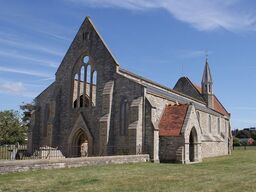
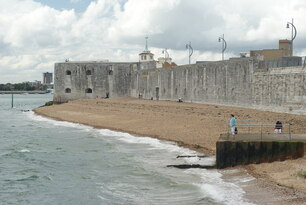
Moleyns was dragged from what is now the Garrison Church onto the beach where the square tower now stands and killed.
Picture
There are those who like to link Moleyns murder to Richard, Duke of York, suggesting that he paid local sailors to kill him because of his part in the loss of the French territories of Maine and Anjou. These lands formed part of the marriage contract of Henry VI to Margaret of Anjou that had been arranged by William de la Pole, the Duke of Suffolk. Moleyns, it is said, made some attempt to save his life by accusing William de la Pole of being solely responsible for their loss. Pole was forced to deny the ensuing rumours in Parliament.

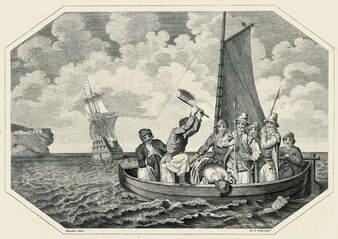
How convenient for those who hated the Duke of York to use these rumours to their advantage? Indeed, some five months later, William de la Pole was found murdered on a beach near Dover!
Picture
So why was Molyens killed?

What is more likely is that he was killed by sailors, not on the order of the Duke of York, but when they discovered that he, as Keeper of the Privy Seal, was in town to make reduced payments to the sailors due to their behaviour during church services.

Following this incident, inhabitants of Portsmouth were excommunicated for fifty years.


​
1 Comment

John Morton - Archbishop of Canterbury

14/9/2022

0 Comments

 
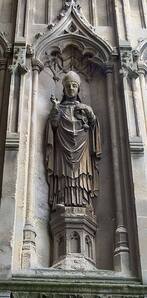
​The 15th September 1500 saw the death of John Morton, Archbishop of Canterbury, Lord Chancellor of England and Cardinal.
Picture
Morton passed through the Wars of the Roses unscathed whereas those of whom he was of service and were of a higher rank perished, those such as Margaret of Anjou, Richard Neville, Edward IV and Richard III.

Morton encouraged Buckingham in his rebellion against the Richard III, and it is he who is considered to be the source of much of what was written about the king - the murder of his brother George, Duke of Clarence and the murder of the Princes in the Tower are but two. Thomas More's 'History of Richard III' was based on Morton's account of the time.

However, Morton was a survivor who knew how to take care of himself, he died an old man at Knole House in Kent, a property that had been granted to the See of Canterbury on the death of Thomas Bourchier in 1486, his political machinations continuing under the new Tudor king.
​
He was buried at Canterbury Cathedral.
0 Comments

Margaret Beaufort in Boston Lincolnshire

7/6/2022

3 Comments

 
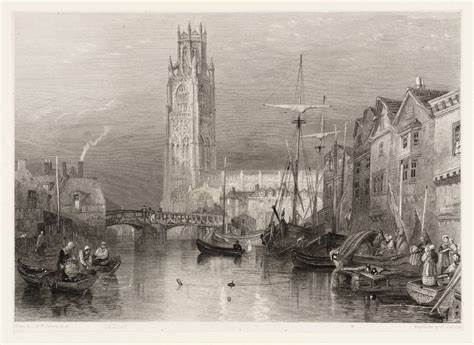
Margaret Beaufort has had links with the county of Lincolnshire since at least the middle of the 15th century, for instance she is known to have held the Manor of Bourne from about 1445. Following the fall of the House of York, she was granted other Lincolnshire estates such as the manor of Tattershall, which, along with its castle, had been forfeited to the crown in 1471. She also received the manor of Stamford following the death of Cecily Neville in 1495. She must have had some affection for the fenlands because she spent much of her time, when she was married to her third husband, at their castle in the aforementioned manor of Bourne.
Picture
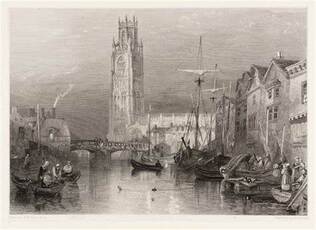
Victorian Etching of Boston - After Joseph Mallord William Turner
​She is also known to have spent some time in the market town of Boston, her account books show an entry of a payment to a child who played a song for her during a visit - maybe she was entertained in the household of Fredrick and Margaret Tilney in their Skirbeck home. She may well have even attended a service at the recently built St Botolph's Church and been shown the newly carved choir stalls and misericords. The Tilney's were an important family in Boston at the time of Margaret's visit, later their great granddaughter would become Henry VIII's fifth wife.
Despite what many think of Henry VII's mother, she was a generous benefactor to churches and abbeys and often kind to those less fortunate that herself and, this is why her emblem of the portcullis can be found dotted around the town. 
Picture
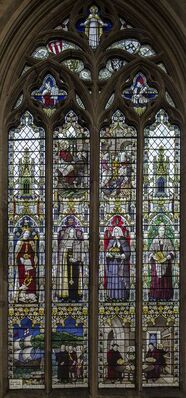
​She can also be seen immortalised, albeit quite recently, in a stained glass window in the at St Botolph's.
3 Comments

Birth of Edward V

2/11/2021

0 Comments

 
​​On the 2nd of November in 1470, Edward, the eldest son of Edward IV and Elizabeth Woodville was born at Cheyneygates, the home of the Abbot of Westminster. He was heir to the throne.
Picture
​Edward was brought up at Ludlow Castle on the Welsh Marches. At the age of twelve, he ascended the throne on the death of his father, however, he and his brother Richard of Shrewsbury were found to be illegitimate when the pre-contracted marriage of his father to Eleanor Butler came to light.
​Before Edward could be crowned, he and his younger brother disappeared.

What happened to these two boys is a mystery - but they are not encased in that urn at Westminster Abbey.
0 Comments

Birth of Henry VII

28/1/2021

0 Comments

 
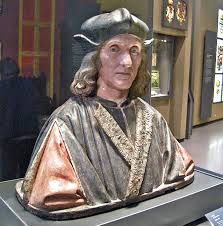
​On this day in 1457 Henry of Richmond, later Henry VII was born at Pembroke Castle the son of  Margaret Beaufort and Edmund Tudor.
Picture
​In 1455, at the age of just twelve years old Henry's mother, a wealthy heiress had married Edmund Tudor, the son of a commoner who had climbed into the bed of a queen of England. Margaret was soon pregnant. Henry was born into a country that was divided by conflict and civil war. Margaret Beaufort was just a child herself and Henry's birth did irreparable damage, this could account for the fact that she never gave birth again, however she turned out to be an influential and dominant figure throughout Henry's life. Margaret was also aware of her son's vulnerability and because of this sent him into the care of his uncle, Jasper Tudor. Following the Battle of Tewkesbury in the May of 1471 Jasper and Henry fled to Brittany and then finally into France. Henry spent, in total, fourteen years of his life in exile.

His return to England in 1485 has been much written about, and most of you will know that he was aided at the Battle of Bosworth by Thomas Stanley his mother's husband, and his brother William. Henry of Richmond became king of England on the 22nd August in 1485.
Picture
I, of course, am a Ricardian and see Henry as a usurper, whose claim to the throne is a tenuous one to say the least, however, Richard and Henry's stories are real and to understand Henry, Richard and the Wars of the Roses it is always best to read widely with the aim to gain an understanding of both sides of story, therefore I add this paragraph taken from the Henry Tudor Society about Henry.

"He is a king often accused of being parsimonious, miserly, ruthless, severe and avaricious to the extreme, cold to his wife and cruel to friend and foe alike. The study of Henry’s life, from his beginnings through to the exile, and from his early reign to the tragic end, put forward a different man. It is this man, the real Henry, not the mythical Henry, that we aim to bring to the fore. A man who had an astounding tenacity to survive, to cling to his throne and to pass his crown to his son in a peaceful manner, something which eluded several monarchs before him."

Here a link to the Henry Tudor Society -

                                                                     https://henrytudorsociety.com/
​
0 Comments

The Readeption of Henry VI : 9th to the 13th September 1470

12/9/2020

0 Comments

 
The names of Richard, Earl of Warwick and George, Duke of Clarence's were never officially mentioned as being part of the 1469/70 uprisings against Edward IV but it is plain to see that Warwick was the puppeteer. Letters, incriminating Warwick, were found in a chest that belonged to the man who led the uprising in Lincolnshire in the March of 1470.

​Robert Welles letter goes some way back up this fact as does his confession, Wells writes:
​
"I have welle understand my many meagges, as welle from my Lord of Warwicke, and they entended to make grete risinges, as forthorthy as ever I couth understand , to th’entent to make the duc of Clarence king…..Also, I say that had beene the said duc and erls provokings that we at this tyme would no durst have made eny commocion or sturing, but upon there comforts we did what we did”......Also, I say that I and my dadier had often times letters of credence from my said lordes.”
Picture
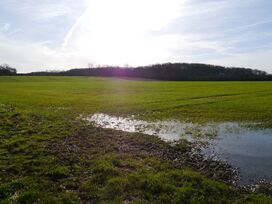
The Battlefield of Losecoate
​It is not hard to imagine what the state of the country was in during these years, anarchy would possibly be a good word to describe it. Following the aforementioned Lincolnshire revolt - the Battle of Empingham or Losecoate Field as it is commonly known, Warwick and Clarence fled the country. They were refused entry into Calais but eventually arrived in the court of Louis XI of France. While under the protection of the French king Warwick set about organising the restoration of Henry VI to the throne of England and the marriage his daughter Anne to Henry's son Edward. An invasion force was soon bound for England's shores and they landed in the West Country between the 9th and 13th of September 1470. Warwick found that his brother John, the Marquess of Montage, had abandoned the Yorkist cause and he also soon learned that the king had left England.
Picture
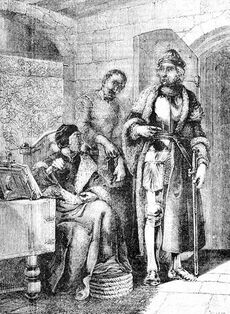
Warwick visits Henry VI in the Tower of London
While most were troubled by the events of 1469 and 1470 the triumphant Richard Neville was in his element as he later placed the crown of England, once again, on the head of Henry VI. Released from the Tower of London, the poor man’s physical health was weak and his mental health clearly unstable. As these two men stood together it was obvious to everybody who was in charge. Real power was now in the gauntleted hand of Richard, Earl of Warwick, the King’s Lieutenant of the Realm.
0 Comments

The Cat, The Rat and the Dog

21/7/2020

0 Comments

 
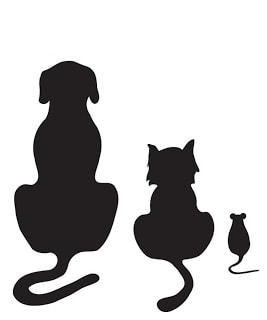
It was in the July of 1484 that William Collingbourne, a Wiltshire landowner penned the infamous rhyme 'The Catte, the Ratte and Lovell our dogge rulyth all Englande under a hogge' with the aim of insulting the newly crowned Richard III.
Picture
Collingbourne had held a number of positions in local government in his home county of Wiltshire during the reign of Edward IV and had been in the pay of Cecily Neville but had been replaced. Although the reasons for writing the poem are unclear, its probable that its roots lay in resentment and plain old jealously!

However, by making his feelings very clear in his poem he did achieve the result he hoped for, I wonder though, did he think that he'd get away with offending a king? He didn't. Collingbourne was arrested, tried and sentenced within four months. He was executed at Tower Hill by hanging, drawing and quartering by the end of the year.
​
William Collingbourne didn't go to the scaffold because of his poetry alone, it was the choices he made in the summer of 1483 and his support of Henry Tudor's invasion and corresponding with him when he was in exile.
0 Comments

Anne Beauchamp

13/7/2020

0 Comments

 
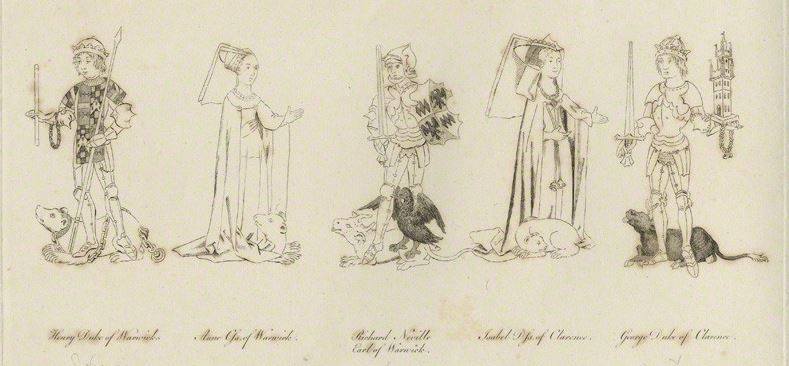
On this day in 1426, the birth of Anne Beauchamp, daughter of Richard Beauchamp and Isabel Despenser.

Following the death of her father in 1439, her brother Henry in 1446 and her niece in 1448, Anne became a very wealthy heiress.

In 1434, Anne was betrothed to Richard Neville, later the Earl of Warwick, their marriage would bring together the lands of his father, along with a major proportion of the Montague inheritance via his mother. The death of Richard at Barnet in 1471, Anne's parents estates, the Beauchamp and Despenser along with their fathers estates fell to their two daughters, Isabel and Anne, the wives of George, Duke of Clarence and Richard, Duke of Gloucester respectively.

For many being an heiress was not a passport to happiness, Anne was ignored in her lifetime, she watched as her daughters fought over their inheritance each making their claim in respect of their husbands. Even in old age Anne was forced to give up much of her fortune for a few scraps Henry VII threw her way.
​
Anne died in 1492, who for what ever reason, didn't make herself heard in life, and in death she was destined to be a woman history has all but forgotten.
Picture
Anne can be seen here, the second figure on the left.
0 Comments

William of Hatfield

8/7/2020

0 Comments

 
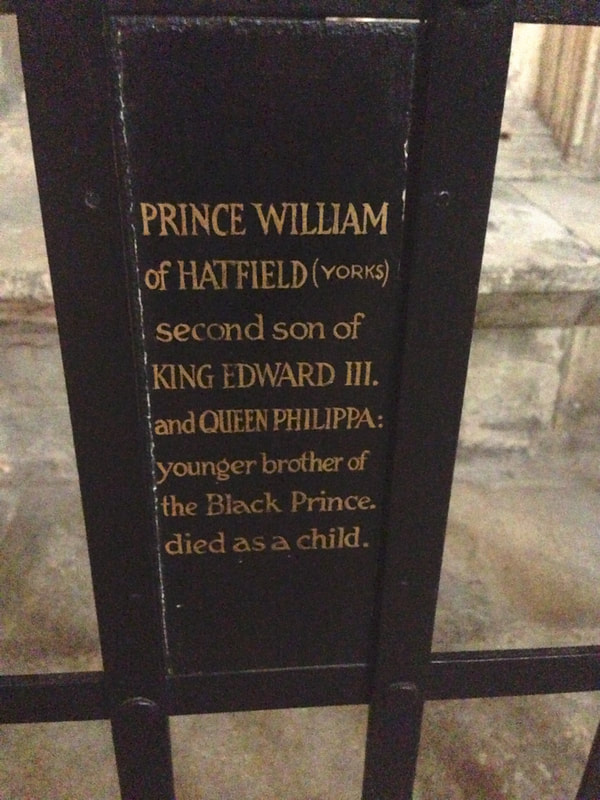
​William was born in the February of 1337 at Hatfield in Yorkshire, he was the second son of Edward III and Philippa of Hainault, however the boy would only live for five months, he died on the 8th July and his body would be laid to rest in York Minster. 
A golden statue or weeper of William can be seen on the tomb of his father Edward III in Westminster Abbey.
Picture
William's older brother Edward the Black Prince had predeceased his father, the death of both these men would leave the country in the hands of various family members notably Richard II - child monarch, John of Gaunt - an ambitious and lustful protector and Henry of Bolingbroke - a murderous would-be monarch.

The seeds of the Wars of the Roses were set!
0 Comments
<<Previous

    RSS Feed

    Categories

    All
    1420
    1450
    1461
    1471
    14th Century
    15th Century
    16th Century
    19th Century
    Acts Statutes And Treaties
    Adam Moleyns
    Alice De La Pole
    Alice Montacute
    Andrew Trollope
    Anjou
    Anne Beauchamp
    Anne Mortimer
    Anne Neville
    Anthony Woodville
    April
    Aristrocracy And Nobility
    Art
    Audley Family
    August
    Baron Sutton
    Battle Of Barnet
    Battle Of Blore Heath
    Battle Of Bosworth
    Battle Of Bramham Moor
    Battle Of Edgecote
    Battle Of Edington
    Battle Of Ferrybridge
    Battle Of Hedgeley Moor
    Battle Of Losecoat Field
    Battle Of Ludford Bridge
    Battle Of Mortimer's Cross
    Battle Of Shewsbury
    Battle Of St Albans 1455
    Battle Of St Albans 1461
    Battle Of Stoke
    Battle Of Tewkesbury
    Battle Of Towton
    Battle Of Wakefield
    Beaumont Family
    Berwick On Tweed
    Boston
    Bosworth Field
    Bredwardine Family
    Burgundian Wars
    Cadaver Tomb
    Calais
    Castles
    Cathedrals And Churches
    Catherine Of Valois
    Cecily Neville
    Charles The Bold
    Christmas
    Crowland Abbey
    Crowland Cronicles
    December
    De La Pole Family
    Despencer Family
    De Vere Family
    Dublin
    Duchess Of Burgundy
    Duchess Of Suffolk
    Duke Of York
    Earl Of Devon
    Earl Of Salisbury
    Edmund Beaufort Duke Of Somerset
    Edmund Earl Of Rutland
    Edmund Tudor
    Edward Earl Of Warwick
    Edward III
    Edward IV
    Edward Of Lancaster
    Edward Of Middleham
    Edward The Black Prince
    Edward V
    Elizabeth
    Elizabeth I
    Elizabeth Of York
    Elizabeth Woodville
    Execution Of Nobles
    February
    Food
    France
    Francis Lovell
    Gainsborough Hall
    Geoffrey Chaucer
    George Duke Of Clarence
    God
    Hampshire
    Henry Earl Of Lancester
    Henry Percy
    Henry Tudor
    Henry V
    Henry VI
    Henry VII
    Henry VIII
    Hereford
    Humphrey Duke Of Gloucester
    Humphrey Stafford
    Isabella Of Burgundy
    Isabel Neville
    Isabel Of Bourbon
    Jack Cade
    James I Of England
    James Tuchet
    January
    Jasper Tudor
    John Beaufort
    John Clifford
    John De La Pole
    John De Vere
    John Duke Of Bedford
    John Fiennes
    John Grey Of Groby
    John Leland
    John Morton
    John Of Gaunt
    John Sutton
    John Tuchet
    July
    June
    Katherine (daug Of Richard III)
    Lambart Simnel
    Lancaster
    Leicester
    Lincolnshire
    Lionel Of Antwerp
    Literature
    Lord Audley
    Louis XI
    Ludlow
    March
    Margaret Beauchamp
    Margaret Beaufort
    Margaret Of Anjou
    Margaret Of York
    Mary Of Guelders
    Mary Of Guise
    May
    Medicine
    Medieval Castles
    Medieval Music
    Medieval Warfare
    Micklegate Bar
    Mohun Family
    Mortimer Cross
    Neville Family
    Normandy
    Northamptonshire
    Nostell Priory
    Nottinghamshire
    November
    October
    On This Day
    Owen Glyndwr
    Owen Tudor
    Parhelion
    Parliament
    Percy Family
    Philippe De Commynes
    Phillippe Pot
    Plantagenet
    Pontifract
    Prince Of Wales
    Princes
    Princes In The Tower
    Princesses
    Propaganda
    Ralph And Edward Shaa
    Ravenspur
    Readeption Of Henry VI
    Rebellion
    Re Enactments
    Revenge
    Rhys Ap Thomas
    Richard Duke Of York
    Richard Herbert
    Richard II
    Richard III
    Richard Neville
    Richard Neville (The King Maker)
    Richard Of Conisbrough
    Richard Of Eastwell
    Richard Of Shrewsbury
    Road To Bosworth: Henry Of Richmond
    Robin Of Redesdale
    Roger Vaughan
    Rowland Lockey
    Rutland
    Sandal Castle
    Sand Sculptures
    Saxton
    Scarborough
    Second Battle Of St Albans
    September
    Shakespeare
    Skirbeck
    Statutes And Treaties
    St Paul's Cross London
    Sufflok
    Tattershall
    Tattershall Collage
    Tewkesbury Abbey
    The Arrivall
    The Beaufort Family
    The Black Death
    The Black Prince
    The Blue Boar Inn
    The Browne Family
    The De La Pole Family
    The Hollow Crown
    The King Maker
    The Legendary Ten Seconds
    The-road-to-bosworth-richard-iii
    The-road-to-bosworth-richard-iii
    The Tudors
    The Wakefield Tower
    The Woodville Family
    Thomas Browne
    Thomas Burgh
    Thomas Clifford
    Thomas Earl Of Lancaster
    Thomas More
    Thomas Percy
    Thomas Stanley
    Thomas Vaughan
    Tilney Family
    Tower Of London
    Towton 25
    Transie Tomb
    Treaties
    Tudor
    Tudors
    Tyrell Family
    Vengeance
    Vulgate
    Wales
    Walter Devereux
    Wars Of The Roses
    Wars Of The Roses In Art
    Weapons
    Welles Family
    Westminster Abbey
    William Aschough
    William Cromer
    William De La Pole
    William Hastings
    William Herbert
    William Hobbes
    William Of Hatfield
    William Of Worcester
    William Oldhall
    William Shakespeare
    Women
    Woodville Family
    York
    Yorkshire

    Archives

    May 2024
    December 2022
    September 2022
    June 2022
    November 2021
    January 2021
    September 2020
    July 2020
    December 2019
    November 2019
    September 2019
    August 2019
    July 2019
    June 2019
    May 2019
    April 2019
    March 2019
    January 2019
    September 2018
    August 2018
    July 2018
    May 2018
    April 2018
    March 2018
    February 2018
    January 2018
    December 2017
    November 2017
    October 2017
    September 2017
    August 2017
    June 2017
    May 2017
    April 2017
    March 2017
    February 2017
    January 2017
    November 2016
    October 2016
    September 2016
    August 2016
    July 2016
    June 2016
    May 2016
    April 2016
    March 2016
    February 2016
    January 2016
    October 2015
    September 2015
    August 2015
    July 2015
    June 2015
    December 2014
    February 2014
    December 2013

Powered by Create your own unique website with customizable templates.