Meandering Through Time
  • Home
  • My Family Stories
    • Bustaine of Braunton: Introduction
    • Hunt of Barnstaple Introduction >
      • Christopher Hunt >
        • Edward Hunt >
          • Richard Hunt >
            • Richard Hunt
            • Mary Hunt
    • Lakeman of Mevagissey >
      • Peter Lakeman c1698-1740
    • Meavy Introduction >
      • 6th to 9th Century Meavy >
        • Meavy Pre Conquest >
          • 1066 and Life in Domesday England >
            • Domesday and 13th Century Charters >
              • The Anarchy >
                • Walter, Wido and William Meavy >
                  • The Beginnings of a New Era
    • Mitchell of Crantock: An Introduction >
      • William Mitchell of Crantock >
        • Samuel Mitchell of Crantock >
          • Edith Mitchell >
            • Epilogue: Lescliston Farm
    • Mohun of Dunster: Introduction >
      • William Mohun c1050 - c1111 >
        • William Mohun c1100 - c1143 >
          • William Mohun - 1176 >
            • William - 1193 >
              • Reynold Mohun c1183 - 1213
              • Reynold Mohun c1210 -1257 >
                • Alice Mohun
    • Purches of Hampshire and Cornwall >
      • Samuel Purches 1733 - 1804 >
        • Samuel Purches 1766 - >
          • William Samuel Purches 1803 - 1861 >
            • Henry James Purches
    • Scoboryo of St Columb Major >
      • James and Joan Scoboryo 1640 - 1686
    • Thomas Vaughan: An Introduction >
      • Chapter One: Monmouthshire, Wales.
      • Chapter Two: The Beaufort Patronage
      • ​Chapter Three: Out With the Old
      • Chapter Four: Kentish Connections and Opportunities >
        • Chapter Five: Getting Personal
        • Chapter Six: ​The Children of Thomas Vaughan
        • Chapter Seven: Moving on
        • ​Chapter Eight: At Ludlow
        • Chapter Nine: The Arrest
        • Chapter Ten: Three Castles
        • Chapter Eleven: The Beginning of the End
        • Chapter Twelve: A Death Deserved ?
    • Smith of Barkby Introduction >
      • Susanna Smith
    • Taylor Introduction >
      • Joseph Taylor >
        • John Henry Taylor
    • Tosny of Normandy >
      • Godehute de Tosny
    • Toon of Leicestershire: Introduction >
      • John Toon 1799 -
      • Thomas Toon 1827 - 1874
    • Underwood of Coleorton Introduction
    • Umfreville of Devon >
      • The Northumbrian Umfrevilles >
        • The Glamorgan Umfrevilles
  • Other Families
  • History Blog
  • Wars of the Roses Blog
  • The Ancestors
  • Hendley of Coursehorne Kent
    • 5th to 12th Century Hendleys >
      • Gervais Hendley 1302 - c1344 >
        • Thomas Hendley >
          • Grevais Hendley c 1471 - 1534 >
            • Walter Hendley >
              • Elizabeth Hendley >
                • Ellen Hendley 1521- 1560 >
                  • Anne Hendley 1523 - >
                    • Other Hendleys
  • Pigott Family of Whaddon Buckinghamshire
  • Walter de Stapeldon :Endnotes
  • Tetbury Charters and Aconbury: Endnotes Abbey
  • Links
  • Contact

The Braose family of Tetbury, their Charters and their Confirmations

10/7/2025

0 Comments

 
Picture
The arms of William Braose, 4th Baron Braose inverted to signify his death.
Medieval grants were often documented through charters, which required confirmation. The confirmation process involved witnesses and seals to make the grant official. Confirmation grants, such as those issued by the Braose family in the 13th century, served to officially recognise and legitimise ownership, rights and privileges. They served to maintain the social order and prevent future disputes.
​​It was at this time that freehold estates turned into what we now know as parishes, and along with the development of these parishes new towns appeared, and this in turn heralded the arrival of the borough - places where tenements created by rural lords were to be held in burgage - that is, buildings/land held by payment of rent. The burgage system originated before the time of the conquest and had a real impact on English towns and cities. The growth and prosperity of the town of Tetbury in Gloucestershire, can be credited to William Braose, 4th Baron Braose, who relinquished his feudal rights in his manor and established ten burgages. The merchants who held them are named in his charter.​
Picture
Example of the burgage system
The family of Valery held Tetbury from 1148 until they were deprived of it in 1197 during the tenure of Thomas Valery. It was then granted to William Braose, 4th Lord of Bramber, probably on his marriage, c1166, to Maud Valery. ​(1) However, Tetbury was confiscated in 1208 following a major fall out with King John which resulted in the cruel deaths, in 1211, of Maud and her eldest son William, (2) In October 1216, Margaret Braose (3) was granted (4) ‘three carucates of land by King John, to be cleared and cultivated, in the forest of Aconbury, to found a religious house there for the salvation of the souls of her father, her mother and her brother' (5) and from which the nuns received rent from the Tetbury burgages at a rate of £148d annually.  ​
Picture
St John the Baptist Church on the site of Aconbury Abbey by Philip Parkhurst
The family's holdings were restored to them following the king’s death in 1216, and the ownership of Tetbury ping ponged between members of the Braose family and several other nobles until 1226 when it was granted to John Braose, the grandson of the 4th Lord of Bramber. John held the manor until his death in 1232 when it reverted to the crown during the minority of his son William, later 1st Baron Braose. William came of age in 1254; he held the manor until his death in 1291 after which it passed to Peter, his son by his third wife Mary Roos.  
Picture
Effergy likey to be Peter Braose at Church of St Mary the Virgin, Tetbury - Image Alan Murry-Rust
​​The original charter of William Braose was first confirmed by his brother Reginald. In 1230, it was confirmed (6) by William’s son John. In 1268, a further grant was made, possibly by William’s stepmother, to the Tetbury burgesses - "to hold to them also y liberties and ffiree customes contained in the Britain Law, in a ample manner as the burgesses of Hereford had or used." (7) John Braose died in a riding accident on his estate at Bramber in 1232, leaving William, 1st Baron Braose as his heir. He had married the daughter of Llywelyn the Great and had served under both Henry III and his son Edward I.  
Picture
Charters of Reginald Braose and John Broase confirming William Braose's original charter via http://archive.muradjames.com/tetburyhistory3/ShowImage.aspx?itemref=D68
One of the first things Edward did when he became king in 1272, was to make sure that the crown profited from growing trade. In 1278, he ordered an enquiry examining liberties within his realm. Under the Statue of Gloucester, he declared ‘We must find out what is ours, and due to us, and others what is theirs, and due to them.’ It was under this statue that in 1287, he brought a Writ of Quo Warranto (8) (by what warrant) against William ‘for the liberties he claimed in Tetbury.’ William’s case was brought under a Court Leet ‘where upon it was found that Tetbury was an ancient borough town and that in the same he had a market and fair’ (9)  
Picture
18th century deptiction of Tetbury market place
On the 20th January 1290, a year before his death, William inspected the charter made by his father to the nuns of Aconbury Abbey, and two days later, in London he confirmed and put his seal to it. (10)  
 
‘...In that village which lies in the village of Tetbury, the burgage of Reginald Palmer (11) is ten and eight pence, and a stipend. Of the burgage of Richard Hiredmon twelve pence, Of the burgage of William the Hunter ten and eight pence: Of the burgage of John Cooper twelve pence: Of the burgage of William Rufus two pence: Of the relict of John Godin twelve pence: Of the burgage of Richard de Themeld five pence: Of the burgage of Thomas five pence: Of the burgage of the relict of Rad. five pence; of the burgage of John de Machim five pence: And of the two forelands, fifteen pence; namely, of the foreland of John W..., which lies before the church land, eight pence; and of the foreland of Roger Brumier, which lies behind his burgage, eight pence; to be received from the hands of the aforesaid and their heirs on the day of the blessed Andrew the Apostle, so that all these priests Burghs and their heirs, are all intending to answer the priests of the house of the Hospital of Aconbury by reason of the priests of the burgages and the liberties granted in my town of Tetbury from all the zeal of the church, and from all the exactions, and from the demands; and they have full liberties in my town of Tetbury, and in the common pastures fruitful tenor of the privileges of the house of the Hospital of John, of the land of Jerusalem, ,......’ I desire that these donations of mine, ratified and valid, may remain, having confirmed my charter to the above; and I have confirmed by my signature; these witnesses are John de Umfreville; (12) then steward; Magistrate Richard de Burleia; Geoffrey de Chaplain, then procurator of the House of Comeberi; Stephen Chaplain of the same place; Allan Chaplain of Tettebiria; Roger de Wathtiam; Philip de Tettebiria; William de Redmerton; Walter de Upton; Joanna Deacon who wrote this Charter and many others.’ (13)  ​
Picture
Effigies of the town's sheep farmers. Tetbury was at the centre wool production.
Today, the town of Tetbury still maintains its links to the Braose charters, you can read about this here:
 Feoffees of Tetbury 

 
​
0 Comments

The Road to Magna Carta

26/3/2020

0 Comments

 
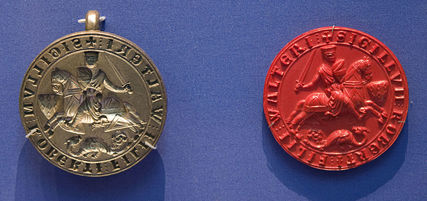
On the 5th May 1215, King John was in the Berkshire town of Reading, it was while he was there that he received a message brought to him by a monk on behalf of a number of disenchanted barons. This message was a formal renouncement of their fealty to the crown.
Picture
The rebels had chosen Essex baron Robert Fitzwalter as their leader. Following a meeting in Northampton, the rebellious army marched to London. As part of their cause they took the cities of Lincoln and Exeter and with London taken their numbers increased, Stephen Langton the Archbishop of Canterbury, was sent to make peace.
Picture
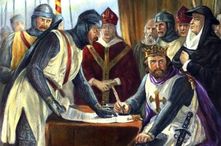
Talks between the rebels and the king ended with the signing of Magna Carta on the 15th June.
Picture
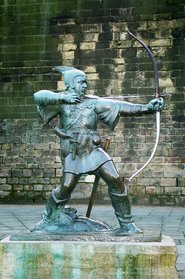
Robert Fitzwalter is one of a number of men who are associated with the legend of Robin Hood. ​
0 Comments

The Treaty of Tordesillas

7/6/2017

0 Comments

 
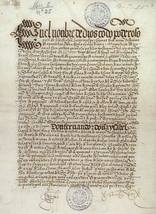
On the 7th June in 1494 what is known as the Treaty of Tordesillas was signed. 
Picture
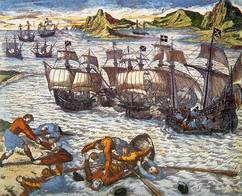
In 1493, Ferdinand and Isabella of Spain were requesting that Pope Alexander VI establish a boundary to show what areas of land belonged to them. In 1494, the Treaty of Tordesillas settled the question as far as Spain and Portugal were concerned: an imaginary line was drawn west of the Azores, everything west of this line would belong to Spain, everything east of the line would go to Portugal.

So how did this treaty affect the European countries? Well, it left them no legal rights to any lands or treasure in the New World, the result of which lead them to resort to illegal methods, that is, piracy.

On this matter, that is Treaty of Tordesillas, the king of France is thought to have said...

                  "The sun shines on me just the same as on the other, and I should like to see the clause in Adam's will that 
                                                               cuts me out of my share in the New World!"


There was no way that the Francis was not getting his share of the booty and so the piracy began. Think of the image of Captain Jack Sparrow and the Black Pearl and you can easily visualise Francis's galleons capturing two Spanish treasure ships as they were on the way to Spain, carrying Aztec treasure. ​
Picture
These two ships were brought to France, on board were gold, emeralds, pearls and various other valuables to the value of 150,000 ducats. (Perhaps some of you will know how much that is in today's money, I couldn't find out.)
0 Comments

The Statute of Marlborough

17/11/2016

0 Comments

 
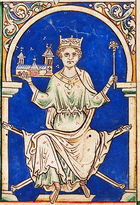
When Simon de Montfort returned to England from France, he perceived Henry III to be a weak king and with the barons aching for a fight, it was de Montfort who stepped in to take charge.
Picture
In 1258 this action culminated in the Provisions of Oxford, a law that served to limit Henry’s power. Henry’s refusal to
accept the Provisions of Westminster the following year saw Montfort’s power base grow rapidly, and by 1263 he was all
​but wearing the crown. 
​
Picture
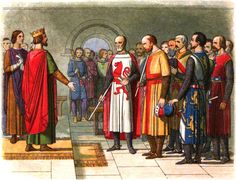
The following year at the Battle of Lewes, Henry, his son the future Edward I, and Richard, Duke of Cornwall were taken prisoner but another year later the tables were turned. At the Battle of Evesham, Simon de Montfort died a grisly death, but Henry's troubles were not over yet. ​
By 1267 the problems between Henry and his barons, which were based on the 1258/9 provisions, had still not settled down
and a new set of laws were needed. On the 18th or 19th of November 1267 in a Parliament at Marlborough the twenty-nine chapters, that made up the Statute of Marlborough, were passed. Of this parliament Walter of Gisborough,
 a 14th-century chronicler and ​priest from the Augustinian Priory in Yorkshire wrote:

​
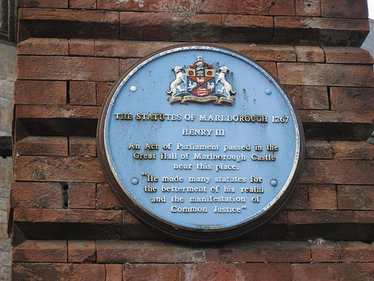
“And the King held his parliament in the octave of St Martin at Marlborough, where on the advice of discreet persons
and by the unanimous voice of his great men he made many statutes for the betterment of his realm and the manifestation
​of common justice, which are called the Statutes of Marlborough.”


Picture
In 2014, over seven hundred years after these laws were passed only two are in force, one, that bans an individual from seeking redress for nonpayment of debts without approval of the law, the second stops tenants from selling off their land.
0 Comments
    Picture

    RSS Feed

    Archives

    July 2025
    April 2025
    February 2025
    January 2025
    November 2024
    October 2024
    September 2024
    April 2024
    February 2024
    October 2023
    June 2023
    February 2023
    January 2023
    December 2022
    November 2022
    October 2022
    September 2022
    July 2022
    June 2022
    May 2022
    April 2022
    February 2022
    January 2022
    October 2021
    August 2021
    May 2021
    March 2021
    January 2021
    November 2020
    September 2020
    August 2020
    July 2020
    June 2020
    May 2020
    April 2020
    March 2020
    January 2020
    October 2019
    September 2019
    August 2019
    June 2019
    March 2019
    February 2019
    January 2019
    November 2018
    October 2018
    September 2018
    August 2018
    July 2018
    June 2018
    May 2018
    April 2018
    March 2018
    February 2018
    January 2018
    December 2017
    November 2017
    October 2017
    September 2017
    August 2017
    July 2017
    June 2017
    May 2017
    April 2017
    March 2017
    February 2017
    January 2017
    December 2016
    November 2016
    October 2016
    September 2016
    August 2016
    July 2016
    June 2016
    May 2016
    April 2016
    March 2016
    February 2016
    January 2016
    December 2015
    November 2015
    October 2015
    September 2015
    August 2015
    July 2015
    June 2015
    May 2015
    April 2015
    March 2015
    February 2015
    January 2015
    December 2014
    November 2014
    October 2014
    September 2014
    August 2014
    February 2014
    November 2013
    September 2013

    Categories

    All
    10th Century
    11th Century
    12th Century
    13th Century
    14th Century
    15th Century
    16th Century
    17th Century
    18th Century
    19th Century
    20th Century
    2nd Century
    5th Century
    6th Century
    7th Century
    9th Century
    Abbeys
    Adventurers And Innovators
    Aethelred
    Agincourt
    Agnes Tilney
    Agriculture
    Amy Robsart
    Angevins
    Anglo Saxon
    Anne Askew
    Anne Boleyn
    Anne Of Cleves
    April
    Aragon
    Architecture
    Art
    Artists
    Arundell Family
    Asycough Family
    Audley Family
    August
    Barons War
    Battlefields
    Battle Of Agincourt
    Battle Of Bosworth
    Battle Of Bramham Moor
    Battle Of Buranburh
    Battle Of Castillon
    Battle Of Crecy
    Battle Of Deptford Bridge
    Battle Of Dyrham
    Battle Of Edington
    Battle Of Evesham
    Battle Of Flodden
    Battle Of Fulford
    Battle Of Halidon Hill
    Battle Of Hastings
    Battle Of Leipzig
    Battle Of Lewes
    Battle Of Lincoln
    Battle Of Maserfield
    Battle Of Northam
    Battle Of Poitiers
    Battle Of Radcot Bridge
    Battle Of Reading
    Battle Of Sedgemoor
    Battle Of Shrewsbury
    Battle Of Stamford Bridge
    Battle Of Stirling Bridge
    Battle Of Stratton
    Battle Of Torrington
    Battle Of Towton
    Battle Of Trafalgar
    Battle Of Visby
    Battle Of Worchester
    Batttle Of Tettenhall
    Beauchamp Family
    Beaufort Family
    Berkshire
    Bigod Family
    Blanche Of Lancaster
    Blanchminster Family Of Binamy
    Boleyn Family
    Brandon Family
    Braose Family
    Browne Family Of Betchworth
    Cambridgeshire
    Carey Family
    Castles
    Cathedrals
    Catherine Howard
    Catherine Of Aragon
    Catherine Of Valois
    Catherine Parr
    Catholic/Protestant Troubles
    Celts
    Chapels And Priories
    Charles I
    Charles II
    Charters And Statutes
    Charworth Family
    Childbirth
    Childhood
    Chivalry
    Chroniclers
    Churches
    Church Of England: Leadership And Governance
    City Of London
    Civil War Leaders
    Cornish Nobility
    Cornish Saints
    Cornwall
    Counties
    Counties: Kent
    Country Houses
    Courtenay Family
    Craft
    Crantock
    Crime And Punishment
    Cronin Family Of London
    Crown Jewels
    Crusades
    Culpepper Family Of Goudhurst
    David Of Scotland
    David Rizzio
    De Burgh Family
    December
    De Clare Family
    De La Pole Family
    Derbyshire
    De Saye Family
    Devon
    Dragons
    Duchy Of Cornwall
    Dudley Family
    Dukedoms
    Duke Of Buckingham
    Duke Of Norfolk
    Dukes Of Northumberland
    Dukes Of Suffolk
    Duncan
    Eadred
    Earl Of Northumberland
    Earl Of Southampton
    Earls Of Cornwall
    Earls Of Devon
    Earls Of Northumberland
    Edgar Aetheling
    Edmund Crouchback
    Edmund Ironside
    Edmund Of Langley
    Edmund (Saxon King)
    Education And Learning
    Edward Courtenay
    Edward I
    Edward II
    Edward III
    Edward IV
    Edward Seymour
    Edward The Black Prince
    Edward The Confessor
    Edward VI
    Edward VII
    Edward VIII
    Edwin Aethling
    Eleanor Of Aquitaine
    Eleanor Of Castile
    Eleanor Of Lancaster
    Eleanor Of Provence
    Elizabethan Playwrights
    Elizabeth Fitzgerald
    Elizabeth I
    Elizabeth II
    Elizabeth Of York
    Elizabeth Stuart
    Elizabeth Throckmorton
    Empress Matilda
    English Civil War
    English Nobility
    English Saints
    English Villages And Towns
    Executions Of Nobles
    Family History
    Fashion
    February
    Feudalism
    Film And TV
    Finn Mc Cool
    Fitzalan Family
    Fitz Peirs Family
    Fletcher Christian
    Folk Tales And Legends
    Fotheringhay Castle
    France
    France And Burgundy
    Frances I
    Francis Bacon
    Francis Drake
    Francis Grey
    Francis Treshem
    Fredrick Barbarossa
    French Kings
    French Revolution
    Funny
    Galileo
    Genealogy
    General Gordon Of Khartoum
    Geoffrey Boleyn
    Geoffrey Of Monmouth
    George Boleyn
    George Duke Of Clarence
    George III
    George Neville
    George Orwell
    Georgian Era
    Geraldine Family
    Ghosts
    Gildas
    Giuseppe Balsamo
    Gloucestershire
    Glouchestershire
    Gothic
    Gotland
    Govenment
    Great Fire Of London
    Great War
    Grimesthorpe House
    Guildford Dudley
    Guildford Family
    Gunpowder Plot
    Gunpowder Plotters
    Guthrum
    Guy De Beauchamp
    Guy Fawkes
    Halloween
    Hampshire
    Hampton Court
    Hans Holbein
    Harald Hardrada
    Harold Godwinson
    Harold Hardrada
    H Bomb Tests
    Helhiem
    Henry Beaumont
    Henry Bolingbroke (Henry IV)
    Henry Brooke (Lord Cobham)
    Henry Grey Duke Of Suffolk
    Henry Howard
    Henry I
    Henry II
    Henry III
    Henry IV
    Henry IV Of France
    Henry Of Grosmont
    Henry Of Lancaster
    Henry Percy
    Henry Stuary
    Henry-stuary-lord-darnley
    Henry V
    Henry VI
    Henry VII
    Henry VIII
    Henry Wriothesley
    Herbs
    Herefordshire
    Heritage Crimes
    Heros And Heroines
    Heros And Villians
    Hever Castle
    Historic Royal Palaces
    History Bites
    Homers IIiad
    Horatio Nelson
    House Of Lancaster
    House Of York
    Howard Family
    Humphrey Duke Of Gloucester
    Humphry Davy
    Huntspill
    Iceni
    Independence
    Industral Revolution
    Industrial Revolution
    Influenza
    Inventions
    Ireland
    Isabella Of Angouleme
    Isabella Of France
    Isabella Of Portugal
    Isambard Kingdom Brunel
    Jack Leslau
    Jacques De Molay
    James Bothwell
    James I
    James I Of Scotland
    James IV Of Scotland
    James V
    James Watt
    Jane Parker
    Jane Seymour
    January
    Jethro Tull
    Joan Of Arc
    Joan Of Kent
    Joan Vaux
    John Chandos
    John Churchill
    John Clifford
    John De Warenne
    John Dudley Duke Of Northumberland
    John Fisher
    John Hussey
    John Montague
    John Morton
    John Of Eltham
    John Of Gaunt
    John Of Portugal
    John Sutton
    John Talbot
    John Talbot (1453)
    John Wesley
    John Wilkes
    John Wingfield
    Judge Jeffreys
    Julius Ceasar
    July
    June
    June 21st
    Katherine Grey
    King Alfred The Great
    King Arthur
    King Athelstan
    King Cnut
    King Harold
    King John
    King Johns Treasure
    Kings Of England
    Kings Of Scotland
    King Stephen
    Knights
    Lace Making
    Lady D'Abanville
    Lady Godiva
    Lady Jane Grey
    Landed Gentry
    Landmarks
    Laurence Olivier
    Law And Order
    Leicester
    Leicestershire
    Leofric
    Lincoln Cathedral
    Lincolnshire
    Lincolnshire Families
    Lincolnshire Local History
    Lionel Of Antwerp
    Lion In Winter
    Literature
    Litreture
    Livinia Fontana
    Local History
    Loki
    London
    Lord Darnley
    Lord Monteagle
    Lords Appellant
    Louis II Of France
    Louis VIII Of France
    Louis XI Of France
    Louis XVI Of France
    Love
    Macbeth
    Maleficent
    March
    Margaret Beaufort
    Margaret Cameron
    Margaret Pole
    Margaret Tudor
    Marie Antoinette
    Marie Lloyd
    Mary Bohun
    Mary I
    Mary Of Guise
    Mary Queen Of Scots
    Mary Tudor
    Mathew Paris
    Matilda
    Matilda Of Scotland
    Matthew Parker
    Maud Of Lancaster
    May
    Mayflower
    Medieval
    Medieval Music
    Medieval Nobility
    Medieval Warfare
    Medieval Women
    Midwives
    Mini History Blog
    Mining
    Mohun Family
    Mohun Family Of Dunster
    Monarchy
    Monmouth Rebellion
    Muntiny On The Bounty
    Music Hall
    Mutiny On The Bounty
    Myths Superstition And Legends
    Napoleon
    National Trust
    Neville Family
    Newark Castle
    Newquay
    Nobility
    Norfolk
    Norman Conquest
    Normandy
    Norman Lords
    Norse Mythology
    Northumberland
    Nottinghamshire
    November
    Occupations
    October
    Of Cornwall
    Oliver Cromwell
    On This Day
    Operation Grapple
    Owen Glendower
    Oxfordshire
    Pagans
    Parliament And Parliamenairians
    Paul Delarouche
    Peeping Tom
    Pentreath Family Of Cornwall
    Pevensey Bay
    Piers Gaveston
    Pilgrimage Of Grace
    Pirates And Highwaymen
    Plague And Pestilence
    Planes And Automobiles
    Plantagnet
    Plymouth
    Poetry
    Pole Family
    Politics
    Pontifract Castle
    Prince And Princesses
    Prince Arthur
    Prince Charles
    Prince Of Wales
    Princes In The Tower
    Queen Anne
    Queens Of England
    Queen Victoria
    Ralph De Coggeshall
    Ralph Hopton
    Rascals
    Rebellion
    Rebels
    Religion
    Religious Leaders
    Religious Martyrs
    Religious Practices
    Rhys Ap Thomas
    Richard Duke Of York
    Richard Earl Of Cornwall
    Richard Empson
    Richard Fitz Alan
    Richard I
    Richard II
    Richard III
    Richard Trevithick
    RIII Visitors Centre
    Riot Act
    Riots And Civil Disobedience
    River Tamar
    Rober Cecil
    Robert Beauchamp
    Robert Cecil
    Robert Count Of Mortain
    Robert De Boron
    Robert Deveraux
    Robert De Vere
    Robert Dudley
    Robert Earl Of Gloucester
    Robert Grosseteste
    Robert Of Gloucester
    Robert The Bruce
    Robin Hood
    Roger Mortimer
    Roger Of Wendover
    Rogues
    Rogues And Rascals Pirates And Highwaymen
    Roman/Greek Gods
    Rome
    Royal Air Force
    Royal Palaces
    Saints
    Saints Day
    Salam Witch Trials
    Samuel Foote
    Samuel Pepys
    Sarah Churchill
    Science
    Science And Technology
    Scoboryo Family
    Scotland
    Scottish Clans
    Scottish Kings
    Scottish Nobility
    Second Barons War
    Segrave Family
    September
    Settlements And Contracts
    Shakespeare
    Sheffield Cathedral
    Sheriff Of Nottingham
    Shropshire
    Siege Of Bewick 1296
    Simon De Montfort
    Simon Of Sudbury
    Sir Francis Drake
    Sir John Falstaff
    Sir John Fastolf
    Sir Walter Raleigh
    Slums
    Snow White
    Somerset
    Song Of Roland
    Spain
    Spanish Armada
    Stafford Family
    Stannaries
    Statues
    Statute Of Rhuddlan
    St Columb
    St Columb Major
    St George
    St Mawgan
    Stonehenge
    Sudeley Castle
    Suffolk
    Sweden
    Symbolism
    Talbot Family
    Taxes
    Templar Knights
    Tennyson
    The Anarchy
    The Arts
    The Arundel Family
    The Ashburnham Family
    The Beauchamp Family
    The Beaufort Family
    The Beaumont Family
    The Bonython Family
    The Crusades
    The D'Aincourt Family
    The De Montfort Family
    The Despencer Family
    The De Tosny Family
    The De Vere Family
    The Dudley Family
    The Grey Family
    The Gunpowder Plot
    The Hollow Crown
    The Howard Family
    The Hundred Years War
    The Mortimer Family
    The Peasants Revolt
    The Percy Family Of Alnwick
    The Rough Wooing
    The Seymour Family
    The Sutton Family
    The Talbot Family
    The Taylor Family
    The Tilbury Speech
    The West Country
    The White Ship Disaster
    Thomas Becket
    Thomas Boleyn
    Thomas Cook
    Thomas Cranmer
    Thomas Cromwell
    Thomas Darcy
    Thomas Fairfax
    Thomas Herriot
    Thomas Holland
    Thomasine Blight
    Thomas More
    Thomas Mowbray
    Thomas Of Lancaster
    Thomas Percy
    Thomas Rokeby
    Thomas Seymour
    Thomas Walsingham
    Thomas Wilson
    Thomas Wyatt
    Tilney Family
    Tin Mining
    Tintagel Castle
    Tivey Family
    Tostig Godwinson
    Tournaments
    Tower Of London
    Towns And Villages
    Towton
    Tracy Family Of Devon
    Trains
    Travel And Tourism
    Treason And Plot
    Treaties And Charters
    Tribal Warfare
    Tristran And Isolde
    Tudor Administrators
    Tudor Period
    Tudors
    Tudor Women
    Ufford Family
    Umfreville
    Usurption
    Uta Of Naumburg
    Valdemar Of Denmark
    Valentines Day
    Vallatort Family
    Vaux Passional
    Victorian Paintings
    Vikings
    Wales
    Waller Family
    Wallis Simpson
    Walter De Stapeldon
    Walter Raleigh
    War Ships
    Wars Of The Roses
    Welsh Castles
    West Country
    Westminster Abbey
    White Horse
    William Adelin
    William Bligh
    William Cecil
    William Davidson
    William De Mandeville
    William De Wrotham
    William Henry Fox Talbot
    William Marshall
    William Montague
    William Moray
    William Of Hatfield
    William Paget
    William Parker 11th Baron Monteagle
    William Rufus
    William Shakespeare
    William The Conqueror
    William Wallace
    Willoughby Family
    Wiltishire
    Wiltshire
    Winchester Castle
    Winchester Cathedral
    Winter Solstice
    Witch
    Wives Of Henry VIII
    Wolf Hall
    Women
    Women Studies
    World War I
    World War II
    Writers
    Wyatt Family
    York
    Yorkshire


    After ten years in the workplace I became a mother to three very beautiful daughters, I was fortunate enough to have been able to stay at home and spend my time with them as they grew into the young women they are now. I am still in the position of being able to be at home and pursue all the interests I have previously mentioned. We live in a beautiful Victorian spa town with wooded walks for the dog, lovely shops and a host of lovely people, what more could I ask for.

    All works © Andrea Povey 2014. Please do not reproduce without the expressed written consent of Andrea Povey.

    RSS Feed

Powered by Create your own unique website with customizable templates.