It was at Exeter Cathedral that Stapeldon was finally laid to rest.
|
Walter de Stapeldon, Bishop of Exeter and twice Lord High Treasurer was born on the 1st February 1265 (1) in Stapeldon, Cookbury (2) in Devon. His father, William Stapeldon, a wealthy freeholder had previously moved to the parish and taken his name from the manor he farmed. Walter was the younger son. His elder son was Richard de Stapeldon, a judge and Justice of the Assizes. His daughters were Joan, who married Thomas Kaignes, Douce who married William Hereward, and a daughter who married John Prudhome. Under the system primogeniture, the eldest son inherited the family estates and the youngest were required to make their own way in the world, either studying law or taking up a position within the church. Walter Stapeldon was educated at Oxford University, he is first mentioned there in 1286 where he is described as a ‘master’, this suggests that he had already graduated with a degree from the university. In 1300, he can be found in an official capacity under Thomas Bytton, Bishop of Exeter. Within five years he was a canon and precentor at Exeter Cathedral, and by 1306 he had graduated as a doctor of canon and civil law. These qualifications led to a career in royal service where he went on several diplomatic missions in Gascony. Following the death of Thomas Bytton in 1307, it was Stapeldon who was his successor. He was consecrated at Canterbury on the 13th October 1308 and enthroned at Exeter early in December. John Prince, in the Worthies of Devon, wrote of Stapeldon's enthronement "Before him Sir William Courtenay, Knt, his steward; after him followed abundance of gentlemen of place and quality. The whole street whereon he walked was covered with black cloth, which, as soon as he was passed over, was taken up again, and given to the poor. When he came to the entrance into the close of the cathedral, called Broadgate, he was received by the canons and vicars choral in their habits, who, singing the Te Deum as they went along, led the new prelate to the church with great pomp and solemnity, and placed him in the episcopal throne. Thus ended, they all hasten to a splendid feast, prepared by the bishop for abundance of nobility, clergy, and others, at the expense well near of one year's value of the bishoprick, which in those days amounted very high." In 1294, Stapeldon can be found as rector of Aveton Gifford in Devon, and he appears in several records in connection with his home country and the neighbouring County of Cornwall. As Bishop of Exeter Stapeldon he was granted several wardships - an appointment as guardian of fatherless minors of English nobles. One young man was eight year old John Arundell of Lanhurne in Cornwall whose father had died between 1306 and 1309. Arundell's wardship had been granted to Stapeldon in 1309, an he was quick to sell some of his charges land. One of the first recipients was his brother Richard who received an acre of land and the advowson of the Church of St Columba in the town of St Columb Major, and Stapeldon himself would later recieve, in the form of a 'gift' the whole of the town itself. In 1311/12, a case was brought against Stapeldon by Thomas Lercedeakne and heard at the Court of Kings Bench by William de Bereford. The case was most certainly linked to the wardship of Arundell. This plea mentioned selling the wardship for £100 and certain lands that went with it, it is likely that a promise had been made, monies paid and then Stapeldon attempted to renay on the deal or extract more money. Stapeldon lost the case and was forced to 'remit and quitclaim' costs. Just over a year later Walter Stapeldon did sell the wardship of John Arundell to the aforementioned Thomas Lercedeakne for £100 (3) Wardships were a lucrative business, and Stapeldon made one last attempt to profit from this family. In 1316 he tried twice, unsuccessfully, to marry John Arundell to his own niece Joan Kaignes (4) On the 12th November 1320, after being made Lord Treasurer of England in the September, the king granted him the power of hue and cry (5) in the county of Cornwall. The king's favour also brought him the lordship of the Hundred of Budleigh in which he was able to grant two new fairs in in the town of Crediton and one in Ashburton, Chudleigh and Clist, and it is written of him that there is ‘ample testament to his dilgence in visiting he diocese, and how attentive he was to the adminstration of holy orders’ (6) One of his last duties in the West Country was in September of 1324 when he was at Lawhitton (7) where, on the 9th August, he addressed the Dean and Chapter of Cornwall, stressing the need to enforce standards and order within the church. He also pointed out the neglected state of several of the parish churches, ordering the clergy to look into the substantial repairs needed. At the same time, he granted the village a Wednesday market. Walter Stapeldon was ‘anxious for the enlightenment of the public mind and the extension of the circle of knowledge.’ For this purpose, he purchased Hart Hall (referred to as Stapledon Hall) in Oxford to house twelve poor students. Later it became Exeter Collage, here his intention was to educate clergy for his diocese, and during the first centuries the college drew students from mainly Devon and Cornwall. On a national level Stapeldon’s star was on the rise. He is known to have attended parliament, missing no sittings between 1313 and his death. In 1315 he was appointed to Edward II’s council and was one of the king’s most loyal supporters, and despite many of the country’s bishops disliking both Hugh Despencers, Walter Stapeldon was not one of them. Kathryn Warner (8) writes of Stapledon ‘Bishop Walter was sometimes seen in the 1320s merely as a creature of the two Hugh Despensers’ which she says was ‘unfair and inaccurate’ he was, she continues ‘too intelligent and able to be merely a yes-man of the king and his over-mighty chamberlain Hugh the Younger.’ Walter Stapeldon’s support of the king and his favourites was ultimately his undoing. One of his early connections with the Isabella and Mortimer affair was in 1323 when he was ordered by the king to take over from Stephen Segrave, 3rd Baron Segrave, under whose watch rebel Roger Mortimer escaped from the Tower of London. Mortimer eventually fled to France, followed a year later by Isabella. Walter Stapeldon was disliked by Edward’s queen, and blamed when the king deprived her of money, and confiscated all her land's property, which included Cornwall. Stapeldon unpopular in London too, and in July 1325, he was dismissed as Lord Treasurer of England and replaced by William Melton. He was accused, justly I think, of avarice and corruption (9) He was ultra modum cupidus et durante officio suo uehementer dives effectus (beyond measure eager and during his office greatly affectd by wealth) Despite that, and maybe to get him out of the way, Edward ordered that he accompany Isabella and Edward, Prince of Wales, later Edward III, to France on his behalf to do homage to the new French king, Charles IV. It was while Isabella was in France that history tells us that she conspired with the exiled Roger Mortimer to overthrow her husband. Isabella and Mortimer’s invasion of England would lead to riots in the capital, the capture and execution of the Despencers, the abdication of Edward II and the gruesome death of Walter Stapeldon. Stapeldon’s death, on the 15th October 1326, was a horrific one. It appears he returned home from France in fear of his life, and in London he encountered a mob as he was riding home along Eldeadanes Lane with his steward John Padyinton and his nephew William Walle (10) Shouts of ‘traitor’ could be heard above the noise, terrified, the three men rode at speed to St Paul’s Cathedral but did not make it through the door because they were recognised All three were captured and pulled from their horses, striped and beheaded (11) Walter Stapeldon’s head was presented to Isabella at Gloucester and bodies buried in ‘rubbish outside the new episcopal residence, afterwards called Exeter House, then in the process of erection’ (12) John Leland, the Tudor antiquary translated a French chronicle, written by William de Pakington in which he wrote "but after xi. weeks, at the request of Queue Isabel's lettres, the bishop's body was carried to the church thereby, ajid after to Excestre, and the two esquires' bodyes were carreyed to St. Clement's Chirch, and there buried." It was at Exeter Cathedral that Stapeldon was finally laid to rest. Walter Stapeldon was a generous benefactor of Exeter Cathedral, and his magnificent tomb can be seen in the cathedral to the left of the alter. Another spectacular piece of religious art, the eighteen metre high Bishops Throne, made of oak felled in Devon was commissioned by Stapeldon in 1312.
0 Comments
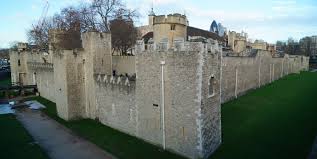
Born in the Tower of London on the 5th July in 1321 was Joan, the youngest of the four children of Edward II and Isabella of France. Joan was born into a country fraught with tension. What started out as a feud eventually escalated into civil war - this feud was the result of Joan's father's reliance on the Despensers, a father and son act. History differentiates between the two by calling the son 'the Younger' - he was a royal favourite. This war came to an end following the Battle of Boroughbridge in March the following year with the execution of Thomas of Lancaster and the exile of both Despensers. However, the Despensers were to return as favourites until the end of Edward's reign. When Joan was just seven she was contracted to marry David of Scotland, the four-year-old son of Robert the Bruce. This marriage formed part of the Treaty of Northampton. Under the terms of the treaty, England recognised Scotland's independence and Robert the Bruce as king. For their part, the Scots would pay an agreed sum of money to end the war. Poor Joan entered into this unhappy marriage on the 17th July 1328 and was crowned as a Scottish queen the next year. David as king was an English sympathiser and disliked in Scotland and history sees him as a disastrous leader. On a personal level, he was a womaniser but left no illegitimate offspring. It is hard to say what Joan had to put up with during her thirty-four-year marriage to the Scottish king however the answer may lay in the fact that following his release from his eleven-year captivity in England Joan chose not to accompany him back to Scotland.
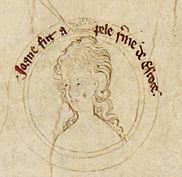
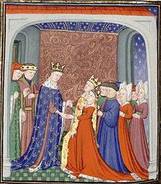
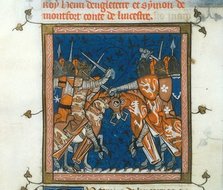
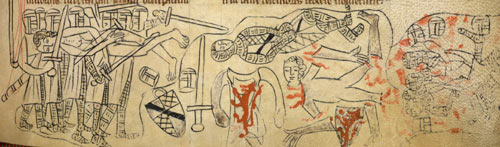
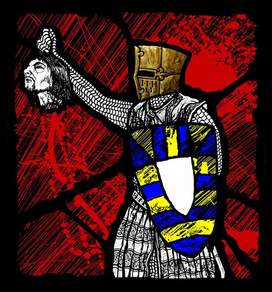
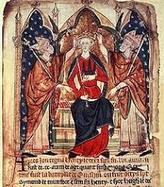
Where Joan lived during the last five years of her life is unknown, she may have lived at Castle Rising, one of her mother's properties however by 1358 she was living with her mother at Hertford Castle. I wonder what these two women talked of during their time together? Did they discuss the subject of living with men they cared little for or Joan's time as Queen of the Scots or maybe Isabella's affair with Roger Mortimer? Oh to be a fly on the wall! By the summer of 1358, Joan was caring for her dying mother who succumbed to death that year. Joan continued to live at Hertford Castle until her own death from the black plague in 1362. She was buried in Christ Church Greyfriars, London. Her tomb no longer exists. 4th August 1265 Following King John to the throne of England in 1216 was his son Henry III. Henry turned out to be an intelligent man who was quick to master the problems of administration and government, he was also seen as an "uncomplicated, almost naive man, and a lover of peace." It seems then that England would, at last, be a calm and peaceful country, however this was not to be. In our tales of history, the events of 1258 to 1265, were played out through the actions of a man who would come to be known as "the father of the English parliament" - Simon de Montfort, who Chronicler Matthew Paris describes as dictatorial and a military strategist, stating he was charismatic, plain spoken and fair. Many of Henry III's barons had become a law unto themselves and they were now seeing Henry as weak, David Carpenter writes that Henry “failed as a ruler due to his naivety and inability to produce realistic plans for reform” and Henry did not do himself any favours, his personal extravagances that had resulted in large taxes and a major fall out with de Montfort did not help matters either. In 1238, in a blatant piece of favouritism towards de Montfort (interestingly, one of the reasons de Montfort took a dislike Henry III was because of his favouritism towards foreign nobles - it seems he conveniently forgot that he was a favoured foreigner himself !) Henry had approved de Montfort’s marriage to his sister Eleanor, and both Henry and de Montfort chose to ignore the condemnation of the marriage by the Archbishop of Canterbury along with the protest made by Henry's brother, the greedy Richard of Cornwall, who made a song and dance of the whole episode, however he was eventually bought on side for a couple of bags of gold. Henry also appointed de Montfort as Governor of Gascony, a mistake that cost him dearly. In Gascony, Montfort was disliked, but he was powerful and he abused his position and this forced Henry to intervene. On Montfort's return to England, he too perceived Henry as weak and with the barons eager for a fight, Simon de Montfort stepped into take charge. It was Simon de Monfort who lead the rebellion against his one time friend, and after the Battle of Lewes in 1264 both the king and his son Edward, later Edward I, were captured and it was de Montfort who ruled in his name. Eventually though,de Montfort lost the support of many of Henry's disaffected barons, this along with Edward's escape would be the beginning of the end of Simon de Montfort's rule. Edward had raised an army that outnumbered de Montfort's forces and had pursued them through the Welsh Marches to the Worcestershire town of Evesham. Edward arrived there on the morning of the 4th of August 1265. This arrival had taken de Montfort by surprise, but he was quick to respond and taking the king along with him engaged Edward's army, however within hours the battle turned into what can only be described as a massacre, one historian writing that it was "an episode of noble bloodletting unprecedented since the Conquest." quickly followed by Simon de Montfort's grizzly end, a fact that bears witness to the slaughter. Of de Montforts death there is a contemporary account that is attributed to a London chronicler name Arnald FitzThedmar. "The head of the Earl of Leicester, it is said, was severed from his body, and his testicles cut off and hung on either side of his nose. In this state, the head was sent to the wife of Roger de Mortimer, at Wigmore Castle. Simon de Montfort’s hands and feet were also cut off, and sent to many of his enemies as a great mark of dishonour to the deceased. The trunk of his body, however, and that alone, was given for burial in the church of Evesham." Also losing their lives that day were Simon's son Henry, and Peter de Montfort who both died in the battle. Hugh Despencer, Chief Justiciar of England, grandfather of the more famous Hugh Despencer the younger, was slain at the hands of Roger Mortimer. By 1267 the problems between Henry and his barons, that were based on the 1258/9 provisions, had still not settled down and a new set of laws were needed. On the 18th or 19th of November 1267, in a Parliament at Marlborough the twenty nine chapters that made up the Statute of Marlborough, was passed. The kings last few years saw his power restored and it was a relatively peaceful one following the signing of the Dictum of Kenilworth. Henry was sensible enough to pass many of Simon de Montfort's ideas and changes to government, and this act was brought into play by the end of October 1266.
|
Archives
July 2025
Categories
All
After ten years in the workplace I became a mother to three very beautiful daughters, I was fortunate enough to have been able to stay at home and spend my time with them as they grew into the young women they are now. I am still in the position of being able to be at home and pursue all the interests I have previously mentioned. We live in a beautiful Victorian spa town with wooded walks for the dog, lovely shops and a host of lovely people, what more could I ask for.
All works © Andrea Povey 2014. Please do not reproduce without the expressed written consent of Andrea Povey. |